The WYldlife Fund Mourns the Loss of Maury Brown


Moose Fund Invests in Cody Regional Office Beaver Holding Facility
The Moose Fund is a restricted line item within The WYldlife Fund created by Mary Rumsey.
To learn more about investing in this fund please reach out to us today!

Beavers and moose have overlapping habitats, and Mary Rumsey of Meeteeste loves moose. With this passion, Mary created a restricted initiative within The WYldlife Fund to focus on projects and research that benefit moose and their habitat. Beavers are incredible ecosystem engineers and provide important riparian habitat which both moose and a plethora of wildlife benefit from! With a generous gift of $60,000, Mary is helping fund a beaver holding facility which will be built at the Cody Regional Office of the Wyoming Game and Fish Department. This project is being led by Jerry Altermatt, Habitat Biologist for the Wyoming Game and Fish Department. Generous gifts of $9,900 each from WYldlife For Tomorrow and Wyoming Untrapped have also made this project possible. Read on for more information about the importance of beavers and the impact of this project which is now under construction!
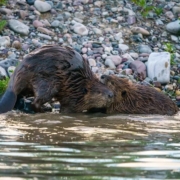
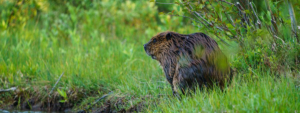
Resource managers have long recognized the role of beavers in creating and maintaining habitat associated with river ecosystems. Beavers, or more specifically the dams they build, can drastically alter these river ecosystems by impounding water. These alterations can result in a multitude of benefits, including higher water tables, reconnected and expanded floodplains, higher late season base flows, expanded wetlands, improved water quality, and more diversity and richness in the populations of plants, birds, fish, amphibians, reptiles, and mammals.
Beavers were extirpated from many drainages in North America during the peak of the beaver pelt market in the mid-1800’s. While efforts to reestablish beaver populations were undertaken in Wyoming in the 1940’s, beavers are still absent in many stream segments, especially where these segments are isolated from core beaver populations associated with larger river systems at lower elevations. It is estimated that beaver populations in Wyoming are only ¼ of historical populations (Olson). The absence of beavers in many of these stream ecosystems has led to degradation of streams, shrinking of riparian areas and loss of habitat for the many species of fish and wildlife that depend upon healthy stream and riparian habitats.
Translocating beavers for restoring stream ecosystem functions has gained popularity among wildlife managers. The rate of successful establishment after translocation varies widely, but certain practices can substantially increase success rates, such as translocating both parents and as many kits as possible from a colony as a group. Beavers are much more likely to stay put if they are not separated from their family members.
To facilitate translocating family groups, beavers must be temporarily held until all or as many family members are trapped. Most beaver translocation practitioners in Wyoming are currently using a mobile holding facility that replicates as much as possible a beaver’s natural habitat. While these facilities work reasonably well, they have several limitations. The most critical limitation is that only one family can be held at a time, as beavers are extremely territorial. Trapping an entire colony can often take two weeks or more. With a short 2-3 month season of trapping, this limitation creates a bottleneck in the translocation effort.
Beaver translocation efforts in other areas in the West have found a solution to this problem by using permanent facilities that can accommodate multiple families. This enables trapping to occur in multiple locations at once, allows for multiple capture attempts to take place, and can allow for “match-making” with single, opposite-sex beavers at the facility.
As a result of these findings, a permanent holding facility that will provide for the short-term needs of beavers awaiting translocation will be constructed at the Wyoming Game and Fish Department Cody Regional Office. This property is located northwest of Cody, WY. The holding facility is designed with three primary considerations: a) efficiency of handling the beavers with a minimum amount of stress to the animals, b) well-being of the beavers while they are being held, and c) ease of maintenance and cleaning.
The facility will contain four individually fenced units consisting of a concrete raceway, feeding area and den. A concrete den will be constructed at the end of each raceway which beavers would access via an underwater entrance to simulate natural dens. The dens will be lined with a removable metal crate for ease of removing the beavers for processing or transport.
Water will be delivered from an irrigation ditch on the property via a headgate and six-inch pipe. An in-line water level control structure combined with stop logs will control the water level in each raceway and, when the stop logs are pulled, will completely drain the raceway for cleaning. A constant flow of 10-40 gallons of relatively clean water will be maintained in each raceway to ensure adequate water quality.
The facility’s location outside of Cody will place it in a logistically ideal location, as it will be centrally located in an area of consistently occurring nuisance beaver problems. The facility will not only serve the beaver translocation needs for the WGFD Cody Region but has the potential to provide a source of beavers for adjacent regions as well. The project will serve as a pilot to demonstrate the efficacy of this approach with the long-term goal of establishing other facilities in strategic locations in the state.
The budget for this project is approximately $80,000. This project is being completed in collaboration with the Wyoming Game and Fish Department and is now under construction.

The WYldlife Fund, a charitable nonprofit partner of the Wyoming Game and Fish Department, announced six generousgifts totaling $77,500 from Williams, NextEra Energy Resources, Project West (Ciner), Rocky Mountain Power, Spire Storage and TerraPower to support the South Kemmerer HWY189 Wildlife Crossing Project.
“Valued partners step up time and time again for Wyoming’s wildlife,” said WYldlife Fund President Chris McBarnes. “We appreciate their commitment to helping save wildlife and improving safety on Wyoming’s roadways.”
Williams donated $27,500 to support the project, along with $10,000 donations from NextEra Energy Resources, through its charitable arm, the NextEra Energy Foundation, Project West, Rocky Mountain Power, Spire Storage and TerraPower.
Over 6,000 big game animals die each year from collisions with vehicles on Wyoming’s highways and interstates. The vast majority of reported collisions involve mule deer. At the current rate, there are 21 big game collisions every day in Wyoming, eight of which involve significant damage to vehicles and/or human injury. The total cost of wildlife-vehicle collisions in Wyoming averages about $55 million per year.
The Wyoming Department of Transportation and Wyoming Game and Fish Department have documented significant wildlife-vehicle collisions with mule deer and pronghorn along a 28-mile stretch of Highway 189 in southwest Wyoming, from mile marker 2 to 30. This project will reduce wildlife-vehicle collisions and promote habitat connectivity for big game by directing animals to existing and new wildlife crossing structures. The total cost estimate of this project is over $23 million and includes replacing existing fences and the construction of five underpasses and one overpass.
“Williams is committed to the continuous improvement of the environment with a laser focus on safety for its employees and the communities where we operate. Support for the WYldlife Fund’s wildlife crossing program underscores this commitment,” said Mark Gebbia, Vice President Environmental, Regulatory and Permitting at Williams.
“We believe in building strong partnerships that make a difference, especially in communities that our projects call home, and that’s why we’re pleased to support this wildlife crossing project in Wyoming,” said Matt Raffenberg, vice president of environmental services for NextEra Energy Resources. “As an industry leader in renewable energy, we are committed to environmental protection and stewardship and believe this project is a win-win for communities and wildlife because it not only helps protect Wyoming’s migrating wildlife, but also helps keep motorists safe.”
“Project West and Ciner are deeply focused on Southwest Wyoming’s best future. For people. For wildlife. For community. We are proud to be a partner in this important effort for the safety of people on the roads and for wildlife to thrive in open spaces,” said Oguz Erkan, CEO of Ciner US.
“The Rocky Mountain Power Foundation is excited to partner with The WYldlife Fund and other Wyoming businesses and conservation organizations to support the Kemmerer wildlife road crossing project,” said James Owen, Vice President, Environmental, Fuels & Mining at Rocky Mountain Power. “This effort not only benefits and conserves wildlife such as mule deer and pronghorn, it provides safer roads for people in Wyoming, including Rocky Mountain Power’s customers and employees. We are proud to be a supporter of this project.”
“At Spire, we’re committed to using our energy to positively benefit the places we call home,” said Scott Smith, president of Spire Storage. “The WYldlife Fund is a great example of that commitment, and we support its goal to protect wildlife in Southwest Wyoming while also improving safety for drivers on Highway 189.”
“The WYldlife Fund’s crossing program will increase both wildlife and passenger safety, and TerraPower is proud to partner on this important project,” said TerraPower President and CEO Chris Levesque. “We are eager to continue to engage with the local community as we ramp up activities at our Natrium demonstration site and this project will have a positive impact on our employees and the community.”
“The Commission has prioritized wildlife-friendly crossings throughout Wyoming. Living in Kemmerer, I know firsthand that this particular project will have a profoundly positive impact on wildlife and members of the community who drive this stretch of highway on a regular basis,” said Wyoming Game and Fish Commission Ken Roberts. “The Commission applauds and thanks these valued partners and all those throughout Wyoming who continue to partner with Game and Fish for the benefit of our wildlife and communities.”
The Pooled Migration Fund serves as a catalyst to significant federal investments in Wyoming

The WYldlife Fund, a nonprofit partner of the Wyoming Game and Fish Department, announced the first recipients of grant funding from its new Pooled Migration Fund. The grant funding is intended to enhance voluntary conservation of private, working lands and Tribal lands within big game migration corridors.
“Private landowners and Tribal partners provide important habitat for wildlife,” said WYldlife Fund President Chris McBarnes. “We’re proud this new effort can accelerate their stewardship efforts, which keeps working lands working and Wyoming’s proud wildlife heritage intact.”
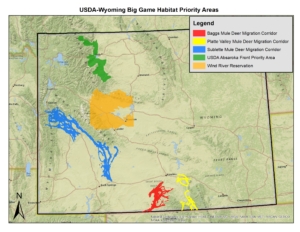
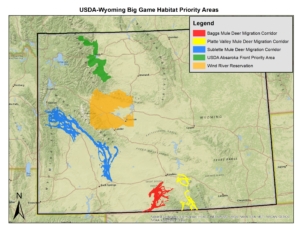
The Pooled Migration Fund supports stewardship of private and tribal lands within the state-designated Platte Valley, Baggs and Sublette mule deer migration corridors, as well as multispecies seasonal ranges in the Shoshone River valleys and Wind River Indian Reservation. It is supported by philanthropic grants from the William and Flora Hewlett Foundation, Wilburforce Foundation and BAND Foundation.
Recipients of the first round of the Pooled Migration Fund grant are the Greater Yellowstone Coalition: $175,000, Jackson Hole Land Trust: $200,000, The Nature Conservancy: $112,156, Western Landowner Alliance: $200,000 and Wyoming Stock Growers Land Trust: $228,350.
“The Pooled Migration Fund is part of a new model of federal, state and philanthropic partnerships aimed at sustaining our state’s working and Tribal lands and wildlife,” McBarnes added.
The Pooled Migration Fund complements the recent partnership between the United States Department of Agriculture and the State of Wyoming through the Big Game Conservation Partnership. The now $22 million pilot partnership — which initially started at $16 million — was established to allow producers to simultaneously manage their land for livestock, wildlife and migration corridors.
“Wyoming’s landowners provide productive wildlife habitat across our state and this initiative focused on wildlife movement is really important,” said Brian Nesvik, Director of the Wyoming Game and Fish Department. “This partnership is opening new doors to put wildlife conservation on the ground.”
“The US Department of Agriculture is very excited to be working alongside the Wyoming Game and Fish Department, the WYldlife Fund, and these grant recipients to support a voluntary, locally-led approach to the conservation of Wyoming’s iconic big game migrations,” said Dr. Arthur Middleton, Senior Advisor for Wildlife Conservation in USDA’s Farm Production and Conservation Mission Area.
The WYldlife Fund expects to announce another Request for Proposals for grant funding from the Pooled Migration Fund this fall focused on project implementation.
# # #
Serving as a nonprofit partner to the Wyoming Game and Fish Department since 2020, The WYldlife Fund specializes in precise and efficient allocation of philanthropic resources to advance wildlife projects across Wyoming. For questions reach out to Chris McBarnes at 307-316-3863 or chris@thewyldlifefund.org.


Request for Proposals
Capacity Building Positions to Facilitate USDA Farm Bill Projects
Due Date: Proposals due January 6th, 2023
Timeline: Funds awarded in February 2023 with support over 2 years (2023 and 2024)
Anticipated Award Amounts: $100,000-$300,000
Anticipated Positions Funded: 3-5
The WYldlife Fund (The Fund) unites people to advance Wyoming wildlife habitat, research, and education. The Wyoming Game and Fish Department (Department) conserves wildlife and serves people. As a nonprofit partner of the Department, The Fund builds strategic partnerships to drive resources to the ground throughout Wyoming in order to advance Wyoming’s wildlife in alignment with the strategic vision of the Department.
The State of Wyoming has demonstrated itself as a leader in both the science and conservation actions related to big game migration for many years. The Wyoming Game and Fish Commission has directed the Department to prioritize conservation actions in big game migratory habitat for many years. Partnerships are critical to achieving these goals because they expand the personnel capacity and relationship network to deliver projects that benefit migratory big game.
In October 2022, USDA Secretary Tom Vilsack and Wyoming Governor Mark Gordon signed an agreement that uses diverse Farm Bill programs and state expertise and resources to support voluntary conservation of private working lands and migratory big game populations in Wyoming. The Fund, seeks proposals from land trusts, NGO’s, County Conservation Districts, Tribal Partners, etc. to synergize this infusion of USDA Farm Bill funds by helping willing landowners both access and navigate USDA Farm Bill funding sources (Agricultural Conservation Easement Program, Environmental Quality Incentives Program, and Grassland Conservation Reserve Program) along with providing NRCS technical assistance in the implementation of Farm Bill delivery in our geographic priority areas.
Executive Summary
Seeking proposals to fund Full-Time Equivalent (FTE’s) which focus on Farm Bill delivery to willing landowners in geographic priority areas. Anticipated awards from The Fund are expected to range from $100,000-$300,000 over 2 years with a desire that positions have sustainability over a longer term with funding commitments from other sources. A future project implementation funding RFP is anticipated.
Geographic Priority Areas
USDA and Wyoming have identified several initial priority areas for their partnership. Proposals that focus on, or encompass, these priority areas will be ranked most highly (see attached map). These Include:
Proposal Focus
At this time, partners recognize a need for additional “boots on the ground” to connect federal and state resources to worthy projects. Proposals to develop new organizational capacity will be favored, with emphasis on:
Ranking Criteria
Additional Requirements
Please reach out to Chris McBarnes with The Fund if you are interested in submitting a proposal at chris@thewyldlifefund.org or (307)316-3863. You will be provided detailed guidelines and a template for your proposal. Proposals will be reviewed by a grants advisory panel comprised of Department, Tribal, Federal, Private Landowner and Fund representation. Proposals will be reviewed by the grants advisory panel and recommendations for funding will be sent to the full Fund Board for consideration and any additional questions.

Merry Christmas and Happy Holidays from The WYldlife Fund! Thanks to our incredible supporters we are grateful to make another big funding announcement for Wyoming’s wildlife.
Wildlife Tourism for Tomorrow, a signature program of The WYldlife Fund, inspires businesses and individuals who depend upon Wyoming’s Wildlife to help fund on-the ground projects that make a difference. This visionary program led by Wyldlife Fund Board Member, Taylor Phillips has already yielded great success for wildlife. This movement puts tourism related dollars directly into projects you select and support our shared wildlife legacy today.
To date, this program has raised $203,000 for Wyoming’s wildlife with over 70 businesses supporting through charitable contributions!
This past week at the Wyoming Game and Fish Commission meeting in Rock Springs, we announced $84,900 in gifts for ‘on the ground’ wildlife conservation projects through this signature program!
Read more information on these projects below!
New Fork River Restoration
Restoration strategies will restore channel dimensions to reference conditions (narrow and deepen channel cross sections), alleviate highly erosive stream banks, and provide additional cover for fish within the channel. Click here to learn more.
South Park Wetlands Enhancement
The effort will reconnect old channel scars in the cottonwood gallery to the Snake River, helping raise the water table and increase the complexity of the forested habitat. Additional shallow water wetlands will be built to provide more filtering, as well as more habitat for migrating waterbirds. Click here to learn more.
Grand Teton National Park Sagebrush Restoration
As the project has progressed, so too has the park’s experimentation with different management techniques to yield better outcomes overall—including greater diversity of native plant species and higher quality habitat, which together are key to supporting wildlife and a balanced ecosystem. Click here to learn more.
Beaver Holding Facility
Beavers can drastically alter river ecosystems by impounding water through dam construction, which can greatly benefit habitat. Dams create higher water tables, reconnect and expand floodplains, expand wetlands, improve water quality, and increase diversity and richness in the populations of plant and animal life. Click here to learn more.
The spectacular wildlife found in our state exist thanks to over a century of dedicated conservation efforts.
Wildlife conservation in Wyoming is primarily funded via the sale of hunting and fishing licenses, federal aid from the Pittman Robertson and Dingell Johnson (excise taxes on hunting and fishing equipment), and a few other small areas. Wyoming Game and Fish Department receives no property taxes from the state of Wyoming or contributions from recreational users. In short, the hunting and fishing community shoulders the majority of the burden of wildlife conservation.
We believe more of us should be pitching in to wildlife conservation in Wyoming. This program aims to change this, creating a funding mechanism that will allow the businesses and individuals who depend upon wildlife to contribute to their sustainable future. Click here to learn more!

Thank you for helping make this signature program a tremendous success. We are currently working through a rebranding effort when it comes to Wildlife Tourism For Tomorrow, so stay tuned! We are excited to continue to grow this initiative and place more dollars on the ground for the benefit of Wyoming’s wildlife.
We wish both you and your loved ones a wonderful Christmas and Holiday Season.
Sincerely,
Chris McBarnes
President
The WYldlife Fund
I-25 (Buffalo to Kaycee) Wildlife Crossing Project – Fully Funded and Bid Accepted
One of The WYldlife Fund’s first objectives has been to construct wildlife crossings in key areas of Wyoming. Wildlife crossings are an effective way to save wildlife and protect drivers. According to one conservative estimate, wildlife-vehicle collisions in Wyoming cost $54-56 million per year. This includes the costs due to human injuries, vehicle damages, and lost wildlife value.

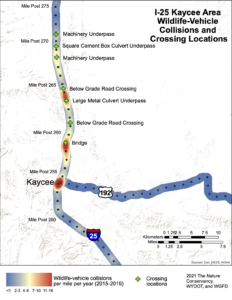
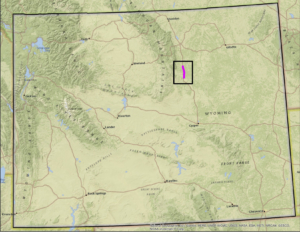
Our first large project focus has been the I-25 (Buffalo to Kaycee) Wildlife Crossing Project. This effort between The WYldlife Fund and our strategic partners seeks to build 15 miles of exclusionary fencing to direct wildlife — mainly mule deer — to existing underpasses as opposed to crossing the highway surface. We are so thrilled to have accomplished our goal, as the Wyoming Department of Transportation recently accepted a bid to start the building of the exclusionary fencing. Construction is expected to begin in spring of 2023.

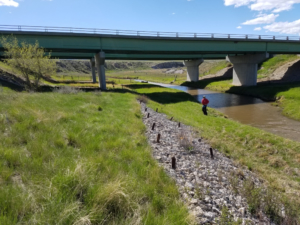
The allure of this project and the reason for its relatively low overall cost is due to the use of these existing underpasses being utilized to provide safe passage for wildlife across I-25. The crossing will improve wildlife connectivity across a 15 mile stretch of I-25 by directing wildlife to six different existing underpasses. Deer escape ramps, cattle guards and gates will also be included in construction plans to facilitate appropriate movements of big game animals into the future.

Carcass counts and crash data will be used to compare conditions before and after project completion to measure success of the project. We will also confer with the Powder River Mule Deer Initiative Research to compare pre and post project data.
By reducing wildlife-vehicle mortalities, we expect an increase in overall mule deer population numbers in the Upper Powder River and Pumpkin Buttes.
Learn more about our Wildlife Crossing Work.
How has The WYldlife Fund contributed to this important project?
The WYldlife Fund is honored to have worked with several other outstanding organizations who advocated for and raised essential funds for this project.
THANK YOU TO THESE INCREDIBLE PARTNERS AND FUNDERS
Wyoming Game and Fish Department
Wyoming Department of Transportation
Knobloch Family Foundation
Muley Fanatic Foundation
Williams Energy
Wyoming Wildlife and Natural Resource Trust
Cabela’s and Bass Pro Shops Outdoor Fund
The WYldlife Fund allows donors to make restricted gifts to fund a passion which is of most interest and relevancy. This model allows the donor faith and confidence that their donation is headed directly to an area of most passion. Thanks to a generous gift by Mary and Charlie Rumsey of Meeteetse, WY we have established a fund which directly supports the majestic moose and the first investment from this fund supports beaver translocation and expansion across Wyoming in key geographical areas.
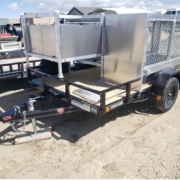
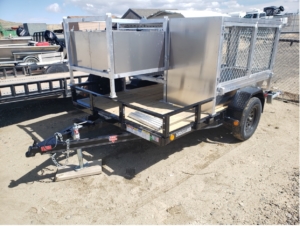
This generous gift from the Rumsey Family, which established the moose fund, went to support the purchase and fabrication of a beaver translocation trailer for the Wyoming Game and Fish Department. This trailer will allow for safe and effective beaver translocation to willing and accepting landowners. These efforts result in enhanced wetlands habitat which benefits a multitude of wildlife species.

Izott Emily Lydia Tween of Washington State University explains, “Increasingly land managers use beavers to restore stream function. Through the impacts of dam building beavers increase water storage and aquifer recharge, resulting in improved stream conditions for fish. Beavers are ecosystem engineers altering habitat by building dams and impounding water and sediment. Beaver ponding can increase surface-groundwater exchange in the hyporhoeic zone which in turn may lead to cooler inputs of groundwater upwelling downstream. This consequent buffering of maximum stream temperatures can be of benefit to temperature sensitive species. Beavers are seen as a cost-effective method for habitat restoration compared to resource-intensive heavy engineering restoration projects.”
Through this gift, the Rumsey Family is standing behind the efforts of Terrestrial Habitat Biologist, Jerry Altermatt and the Wyoming Game and Fish Department in their commitment to strategically utilizing these ‘ecosystem engineers’ and the positive enhancements they bring to the landscape and habitat.
The WYldlife Fund thanks Mary and Charlie for their incredible commitment to the wildlife of Wyoming and their jumpstart of the moose fund! If you would be interested in investing in this important cause please reach out to us at 307-316-3863 or email chris@thewyldlifefund.org.
The WYldlife Fund is proud to support the following projects through our microgrant program. Please feel free to share our website and the application for a microgrant with any organization that has a project that is strategically aligned with our vision and mission statement, “Uniting people to advance Wyoming wildlife habitat, research, and education”.
Greater Yellowstone/Crooked Creek Bear Proof Trash Storage–
Through our microgrant program, The Wyldlife Fund is proud to have provided a $2500 grant to the Greater Yellowstone Coalition to provide Pro-Pactor trash compactor trailer to the Crooked Creek Ranch in the Dunoir area west of Dubois, WY. This trailer will be used to limit grizzly bear conflicts in the area by responsibly and effectively storing waste in a bear proof container. Other partners in this project are: Crooked Creek Ranch, U.S. Forest Service, Wyoming Game and Fish, and the Greater Yellowstone Coalition. The Wyldlife Fund is proud to provide support for this cause and promote responsible waste management and education.
Park County Weed and Pest: Boot Brush Stations
Partnering with the Park County Weed and Pest, The Wyldlife Fund is proud to sponsor the purchase of five additional PlayCleanGo Boot Brush Stations to place at trailheads throughout Park County. These stations provide a boot cleaning station at trailheads in order to help prevent invasive species introduction into areas of critical wildlife habitat. The WYldlife Fund is happy to work with the BLM and Shoshone National Forest to provide $2500 through our Microgrant program to provide additional stations and promote education about invasive plant species and the part that humans play in spreading them into areas that are critical for wildlife.
Wyoming Game and Fish: Afton Elk Herd Native Winter Range Project
The WYldlife Fund with our partners at the Wyoming Game and Fish are happy to support the efforts of Ben Wise (regional wildlife disease biologist) to research the portion of the Afton elk herd that are not currently utilizing the elk feedgrounds. This project will involve capturing and collaring elk with the use of helicopters to provide critical data concerning migration patterns and utilization of native winter range. Our $2500 microgrant will help offset the cost of collars and activation fees, etc. The mission statement of The Wyldlife Fund is: Uniting people to advance Wyoming wildlife habitat, research, and education. This project is perfectly aligned with that goal.

Joey’s Fly Fishing: Joey’s Stream Keepers Conservation Program
Working together with our friends at Joey’s Fly Fishing, The Wyldlife Fund is proud to provide sponsorship of the Joey’s Stream Keepers Conservation Program through a microgrant of $2500. These funds will be utilized to provide research through the use of river boxes, entomology collection and analysis kits. The aim of this research is to provide education to support efforts in stream management and protection for long-term sustainability. Other partners in this effort are as follows: Trout Unlimited, Holy Name Catholic School, Admiral Beverage, and Oxbow Ranch (Randal Huckeba).